The Best Gooseneck Kettles for Pour-Over
By the dialed team · Updated 2026-05-11
The kettle is the one piece of pour-over gear you hold for the entire brew, so it is where most of your control lives. Two things separate a kettle worth buying from a cheap one: how steadily it holds temperature from first pour to last, and how precisely the spout meters the stream. Get those two right and the rest is preference.
A gooseneck does not extract coffee for you. It makes a repeatable pour possible. If your water lands at a different temperature and speed every morning, your cup drifts even when the beans and grind stay put. Buy for consistency first, features second, and looks a distant third.
Temperature control, and the hold that keeps it there
Extraction is temperature-sensitive. Most brewing lives in the 195 to 205 F range (about 90 to 96 C). Lighter roasts are denser and want the top of that band, near 200 to 205 F. Darker roasts extract faster and turn bitter when the water is too hot, so drop to the bottom, even a touch below, around 185 to 195 F. Setting a target is the easy part. Holding it is the hard part.
A three-minute pour-over bleeds heat. Water poured at 205 F can land a good 10 F cooler by the final pour as the kettle sits and the stream sheds heat in the air. A real PID controller modulates the element to hold within a degree or two of your set point, and a hold function keeps it there on the base for the whole brew instead of heating to target and coasting down. On multi-pour recipes that stability shows up in the cup as even extraction. Without a thermometer, water off a rolling boil drops roughly 10 F in the first 30 seconds in an open kettle, and altitude lowers your ceiling (boiling point falls about 2 F per 1,000 feet), so 'just off boil' means different things in Denver and at sea level.
Electric PID kettles, top-rated first


The spout is where your stream lives
The narrow gooseneck exists to give you a thin, steady, aimable stream. Tip diameter and neck length set your range: a fine tip lets you feather a slow trickle for the bloom and for delicate light-roast pours, while a wider tip opens up and adds turbulence when you want faster agitation. The finest tips give the most control but empty a full kettle slowly and can feel twitchy until you learn them. A moderate taper is more forgiving day to day.
One thing nobody warns you about: flow rate changes as the kettle empties. A full kettle has more head pressure and pours faster, so the same tilt gives a slower stream once it is half gone. Balance matters here: weight near the handle lets you hold a steady angle without wrist fatigue, and that steady angle is most of stream control. Counterweighted or lower-set spouts start their flow closer to level, so you are not tipping the kettle steeply just to get water moving.
Variable-temp gooseneck kettles, best-reviewed

Original Electric Gooseneck Kettle

Brewista Artisan Gooseneck Variable Kettle

Brewista Artisan Gooseneck 1 L Kettle w/ Variable Temperature

Gooseneck Electric Kettle with LED Display, Precision Temperature Control, 4-Hour Keep Warm(Available in US)
Stovetop or electric
A stovetop gooseneck is cheaper, has nothing electronic to fail, and stores flat. The catch is that you manage temperature by feel or with a separate thermometer, and the water cools while you brew with no way to add heat back. If your cooktop is induction, confirm the kettle has a magnetic, induction-ready base, because plenty of stainless goosenecks will not heat on induction at all.
An electric variable-temp kettle sets an exact temperature, holds it, and usually adds a timer or count-up clock on the base to pace your pours. For anyone brewing daily and dialing in a recipe, that convenience earns its counter space. The downsides are real: it needs an outlet and room, the electronics are a failure point over years, and the cheapest models cut corners on lid hinges and build. Match the choice to how you brew, not to what looks best next to the grinder.
Stovetop goosenecks, cheapest first

MARRAKESH Gooseneck Pour Over Stovetop Kettle - 34 fl. oz / 1000mL, Stainless Steel
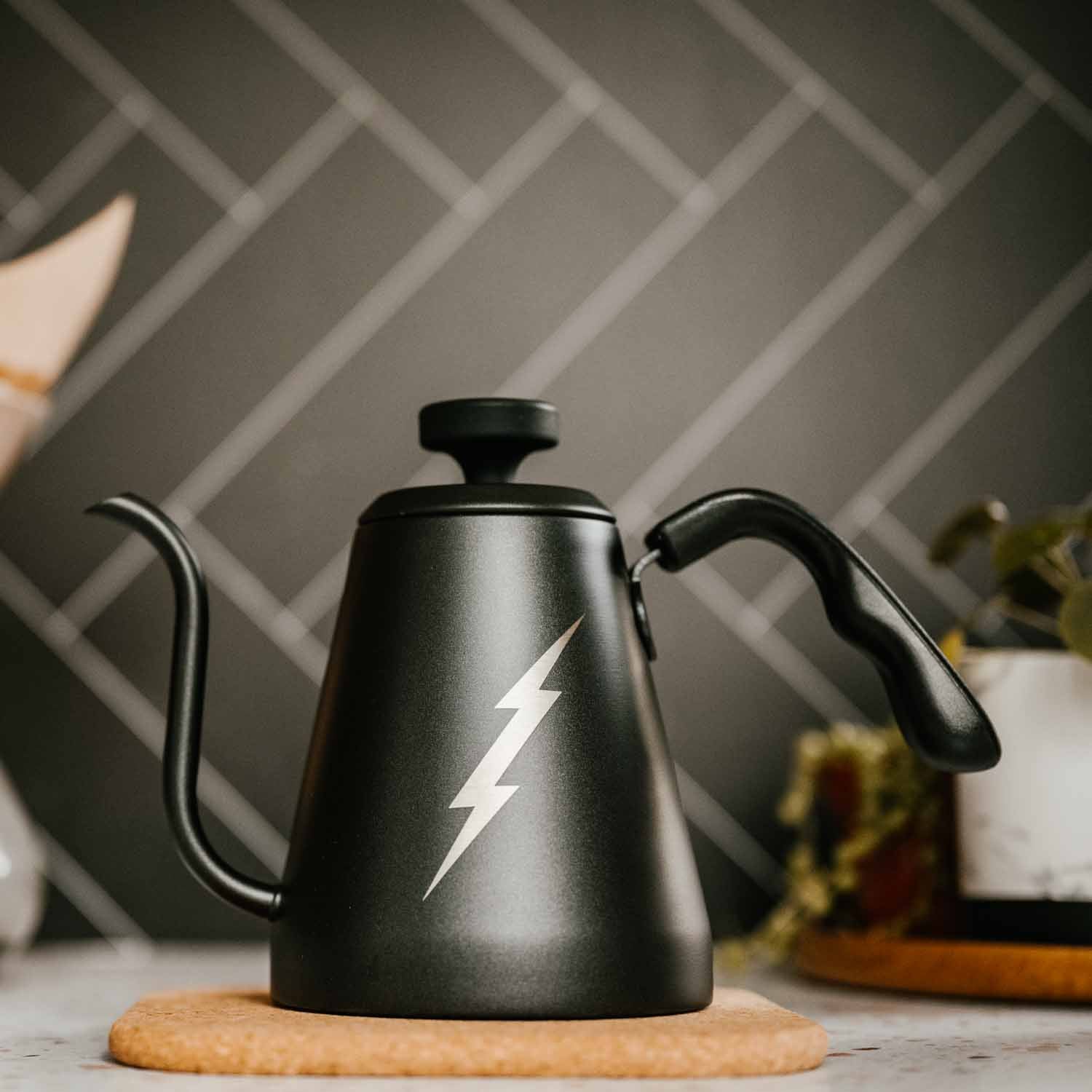
Stovetop Gooseneck Kettle

Stainless Steel Gooseneck Chettle®

GROSCHE Marrakesh Pour Over Kettle
Size it for your brew, not your countertop
Capacity is a control decision, not just a volume one. A common recipe runs about 30 g of coffee to 500 g of water. A small 0.6 L kettle can technically cover that, but it runs low fast, and a near-empty kettle pours quicker and less predictably as head pressure drops. A kettle around 0.8 to 1.0 L holds enough for single and double brews with margin, keeps the water level and your stream steadier, and still heats reasonably fast.
Bigger is not better here. A 1.5 L kettle full of water is heavy and hard to pour precisely, especially at the start of the brew when it is fullest and your opening pour matters most. For pour-over specifically, the sweet spot is a kettle you can hold at a fixed angle for 20 to 30 seconds without your wrist shaking. Fill it to leave headroom, never to the brim.
Good questions
›Do I really need a gooseneck, or will any kettle work?
Any kettle boils water, but a standard spout dumps it in a wide, fast gush you cannot aim. Pour-over depends on wetting the grounds evenly and controlling agitation, and that needs a thin, steady, directed stream. A gooseneck is what makes that pour repeatable. If you only ever use an immersion brewer like a French press, you can skip it.
›What temperature should I actually set?
Start at 200 F (93 C) for most coffees and adjust by taste. If the cup is sharp, sour, or thin, go hotter, up toward 205 F, which suits lighter roasts. If it is bitter or harsh, come down toward 190 to 195 F, which suits darker roasts. Change one variable at a time, and hold temperature steady while you work on grind so you can tell what did what.
New gear, real prices, no hype
Occasional emails when something genuinely good lands or drops in price.