The Best Manual Lever Espresso Machines
By the dialed team · Updated 2026-04-20
A lever espresso machine puts the pump in your hand. Instead of a vibratory or rotary pump forcing water through the puck at a fixed pressure, you pull a lever that either compresses a heavy spring or drives a piston directly, and that force is what pulls the shot. The result is slower, quieter, and far more physical than a pump machine. It is also the closest most of us will get to feeling what is actually happening inside the group head.
There is a catch, and it is worth saying up front: levers punish sloppy grinding and reward patience. You will pull some sour, gushing, or choked shots in the first two weeks. But the ceiling is high, the machines are often built to be rebuilt rather than replaced, and the daily ritual is genuinely part of the appeal instead of a chore. Here is how they work and who should actually buy one.
How lever pressure profiling actually works
A pump machine holds roughly 9 bars for the whole shot. A lever does not. When you engage it, you start with low pressure that lets the puck saturate gently at around 1 to 3 bars, a natural pre-infusion. Then peak pressure arrives near 8 to 9 bars and tapers off as the spring unwinds or your arm eases. That rising-then-falling curve is pressure profiling, and on a pump setup you would pay a lot extra for a machine that does it automatically.
The declining tail is a feature, not a flaw. A gentle start lets the puck settle before full pressure arrives, which cuts channeling. The low-pressure finish then pulls the rest of the shot without the bitter edge of forcing water through an eroded puck. Lighter roasts especially reward that gentle pre-infusion and long finish. The catch is repeatability: your hand is the pump, so two shots are only as consistent as your technique.
Manual levers, compared across shops

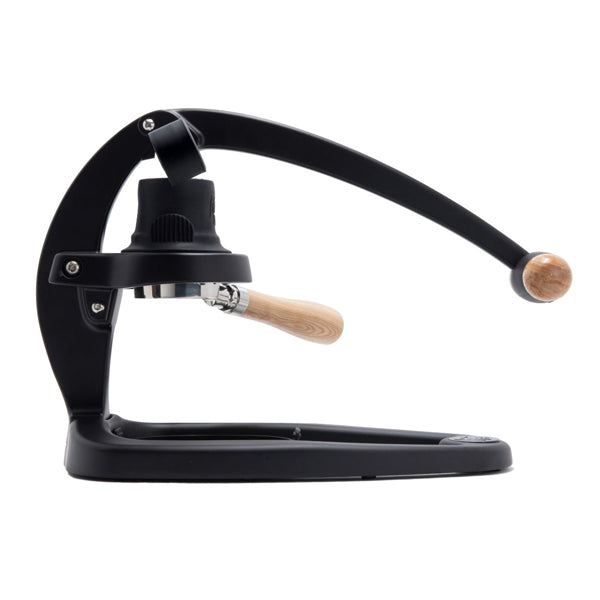


Spring lever versus direct lever
Spring lever machines store your effort for you. You cock the lever, which loads a stiff spring, and the spring releases that force through the puck along a preset curve that starts near 9 bars and decays. Cocking takes a firm pull, but it is brief, and once the spring is doing the pressing the profile stays fairly consistent shot to shot. The feel is smooth and mechanical, with the curve essentially baked into the spring.
Direct lever machines, sometimes called manual piston, link the handle straight to the piston with no spring in between. You are the pressure. You can pre-infuse for as long as you like, ramp up slowly, hold a plateau, and feel the puck pushing back through the handle. It is more expressive and more demanding. Beginners usually find spring levers more forgiving, while tinkerers drift toward direct levers because nothing is hidden from them.
Spring levers, price low to high



The learning curve, the ritual, and who it is for
Budget two to three weeks and a bag or two of beans to get consistent. A good grinder matters even more here than on a pump machine, because a lever amplifies grind problems: you feel every channel and choke in your hand. Change one variable at a time, keep a scale on the counter for your dose, and expect the first week to be humbling.
For a lot of owners the ritual is the whole point. No motor, no shot timer racing you, just you deciding when to pre-infuse and how hard to pull. It slows the morning down in a way people either love or find tedious. Buy a lever if you enjoy process and want to taste what pressure actually does to a shot. Skip it if you want to hit a button half-asleep and walk away with coffee.
Hand-pull makers, cheapest first


Good questions
›Do lever machines make less crema than pump machines?
Not less, just different. A lever's gentle pre-infusion and falling pressure tend to produce a softer, more delicate crema than a pump's flat 9 bars. With fresh beans and a fine grind you will get plenty of it. Stale beans show up faster on a lever, so freshness matters more than the pump type.
›How much arm strength do I actually need?
Less than you would guess. Spring levers do the pressing for you: you just cock the lever, which takes a firm but brief pull. Direct levers ask for steady force during the shot, roughly the effort of a slow push-up through one arm, but technique and a good grind matter far more than raw strength. Most people adapt within a few days.
New gear, real prices, no hype
Occasional emails when something genuinely good lands or drops in price.